Fecha actual 23 Sep 2026 23:07

Todos los horarios son UTC + 1 hora [ DST ]


Nuevo tema Responder al tema  [ 1636 mensajes ]  Ir a página Anterior  1 ... 103, 104, 105, 106, 107, 108, 109, 110  Siguiente
Autor Mensaje
 Asunto: Re: La otra ópera
NotaPublicado: 18 Oct 2025 13:37 
Desconectado
Div@
Div@
Avatar de Usuario

Registrado: 05 Oct 2005 20:42
Mensajes: 3034
Imagen

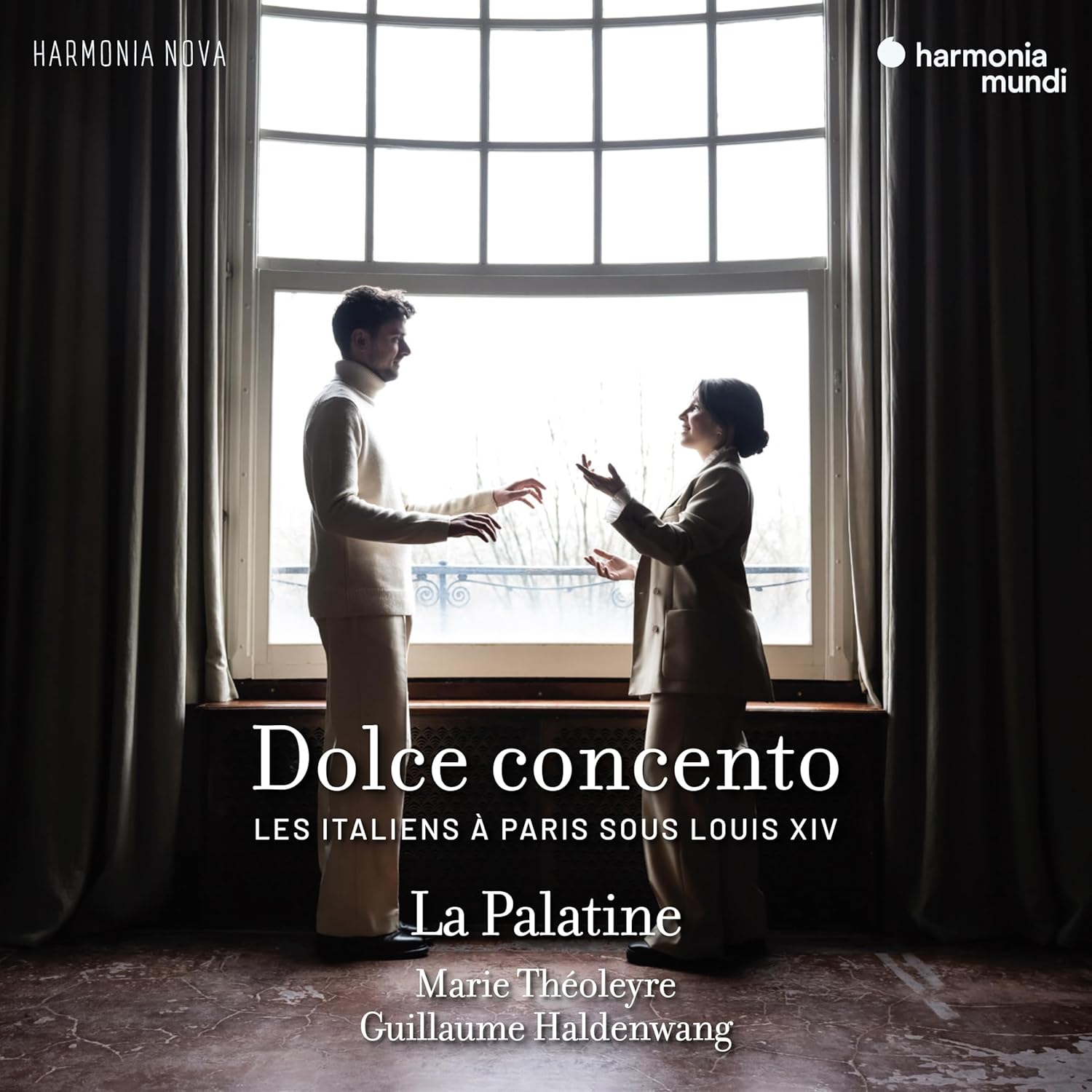
Pascal Collasse [1649-1709] He was born in Reims. By 1651 his family had moved from Reims to Paris. He became a choirboy at St Paul and completed his education at the Collège de Navarre. In 1677 he succeeded Lallouette as J.-B. Lully [i]'s secretary and as batteur de mesure at the Paris Opéra, positions he kept for ten years. His main work for Lully was to compose the inner voices where Lully had supplied only soprano and bass parts for certain pieces in his operas. Lully's powerful support virtually guaranteed him a post at the royal chapel at the time of the 1683 competition for four sous-maîtres to replace Du Mont and Pierre Robert: Collasse, Minoret, Goupillet and M.-R. de Lalande were named, Collasse being given the quarter-year beginning in April. He remained at the chapel until 1704, when he was granted a 900-livre pension. On 8 January 1685 he followed Du Mont as compositeur de la musique de la Chambre; he shared this post with Lalande. In 1689 he married Blasine Berain, daughter of Jean Berain, Lully's stage designer. After the death of Michel Lambert in 1696, Collasse was appointed maître de la musique de la Chambre and maître des pages; he held the latter position until his death. He also continued to be associated with the Académie Royale de Musique as an opera composer, and in 1698 he was awarded a pension of 3000 livres.

Soon after Lully's death, his heirs embroiled Collasse in a lawsuit. He lost the 100-pistolet pension and dwelling willed him by Lully. Le Cerf de la Viéville reported that Collasse kept several of Lully's rejected airs de violon and that these and other pieces by Lully found their way into Collasse's own compositions [for example, the chorus ‘Rangeons-nous’ from the prologue to the Ballet des saisons is largely the chorus ‘Rien n'est si doux’ from Lully's Ballet des muses of 1666]. In certain prefaces Collasse acknowledged his debt to Lully [see Ballet des saisons, edns of 1695 and 1700, and La naissance de Vénus, edn of 1696], but he did not always specify which music was Lully’s and which was his own; this resulted in another attack from the Lully family, who accused him of plagiarism. In 1690 Collasse received royal privileges to found opera companies in Bordeaux, Toulouse, Montpellier and Lille. Only Lille served his interest. When, in 1696, the building which served the company was destroyed by fire, rebuilding required 10,000 livres from Collasse, 6000 of which were provided by Louis XIV. These events took their toll, as did his inability to repeat the success of Thétis et Pélée [1689] in his later tragédies lyriques. Without offering evidence, Titon du Tillet [p.518] asserts that Collasse then forsook music to search for the philosopher's stone – a vain quest, which ‘only ruined him and weakened his health’.

Years of musical indoctrination under Lully did little to help Collasse develop a musical language of his own and did much to insulate him from the Italian counter-currents that spread through Paris at the end of the grand siècle. His best work is Thétis et Pélée, which remained in the repertory for 76 years. In it he used the orchestra more imaginatively than did Lully. Act 2 includes a 100-bar ‘tempête’ that was probably the model for orchestral storms in Campra’s Tancrède and Idomenée and in Marin Marais’ Alcyone. Its exciting tirades for violins and bassoons penetrate both the chorus Quel bruit soudain of scene vii and the ensuing scene for Neptune. The Ballet des saisons [1695] is one of the first stage ballets in which each act has its own subject. It was the immediate structural model for Campra's opéra-ballet, L'Europe galante, but unlike the characters of that work, its characters are exclusively mythological and allegorical. Along with J.-N. Marchand [i], J.-B. Moreau and Lalande, Collasse set Racine's Cantiques spirituels for the young ladies of the Maison Royale at Saint-Cyr; his four settings include short airs [mostly binary], duets and trios, all interspersed with symphonies for flutes or recorders and violins, and four-part women's choruses. In spite of the number of performers called for in the score, Collasse states in his preface that the Cantiques ‘may be sung throughout by a single voice, because the main melody [‘le sujet’] is always in the highest voice’. Most of Collasse's grands motets for the royal chapel are lost. The title-page of a manuscript of motets by Lalande [F-Pn], however, announces that three are by Collasse: they bear a strong resemblance to the motets of Lalande in their speech rhythms and independent orchestral parts.

Wikipedia

Achille et Polyxène, tragédie en musique [1687]. Patrocle va combattre, et j'ai pu consentir.

Thétis et Pélée, tragédie en musique [1689]. Ciel ! En voyant ce temple redoutable.

Enée et Lavinie, tragédie en musique [1690]. J'entends d'agréable concerts.

Imagen

_________________
Imagen


Arriba
 Perfil  
 
 Asunto: Re: La otra ópera
NotaPublicado: 24 Oct 2025 9:49 
Desconectado
Div@
Div@
Avatar de Usuario

Registrado: 05 Oct 2005 20:42
Mensajes: 3034
Imagen

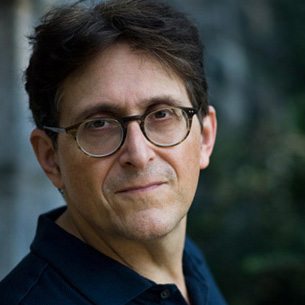
Sivan Eldar [*1985] She was born in Tel Aviv. Sivan began her musical education at the age of 5, studying classical piano and voice. At the age of 15 she joined the experimental United World College in New Mexico, where she focused on music while also becoming involved in environmental and political work. She continued her studies in Boston at the New England Conservatory [BM], where she studied music composition, piano and ethnomusicology, alongside courses in gender studies and ethics. In 2009 she moved to California to pursue her PhD in composition at UC Berkeley with Franck Bedrossian, Edmund Campion, Cindy Cox and Myra Melford, with a diploma in new media studies at the Center for New Music and Audio Technologies [CNMAT] and the Berkeley Center for New Media [BCNM]. She then moved to Paris for training at the Institut de Recherche Acoustique/Musique [IRCAM] under Hèctor Parra [Cursus 2016-17]. Since 2018 she has been in residence at IRCAM, working primarily with computer music designer Augustin Muller and researcher Jean-Louis Giavitto.

Like Flesh, ópera de cámara [2021]. Fragmento.

Imagen

_________________
Imagen


Arriba
 Perfil  
 
 Asunto: Re: La otra ópera
NotaPublicado: 31 Oct 2025 9:45 
Desconectado
Div@
Div@
Avatar de Usuario

Registrado: 05 Oct 2005 20:42
Mensajes: 3034
Imagen

Theobaldo [Teobaldo] di [Théobalde] Gatti [c.1650-1727] He was born in Florence. According to Titon du Tillet it was the impact on him of some of Lully’s music that he heard in Florence that prompted him to move to Paris. He did so about 1675, was granted letters of naturalization by Louis XIV and was generally known in France simply as ‘Théobalde’. He made his name in Paris as a teacher of the viol, and he played the bass viol in the orchestra of the Académie Royale de Musique. He seems to have enjoyed the protection of the Dowager Princess Conti [an excellent musician who was taught by François Couperin and d’Anglebert]. He published a Recueil d’airs italiens [Paris, 1696], a set of ten solo songs and two duets that helped to create a demand for Italian music in France. Two stage works by him are also known: Coronis, a heroic pastoral to a libretto by Chappuzeau de Beaugé that was given in Paris in 1691 [manuscripts in F-Pn, Po and GB-Cfm where it is incorrectly attributed to Lully], and Scylla, a tragédie lyrique, with a libretto by Duché de Vancy [performed and published in Paris in 1701]. The style of these works has much in common with that of Lully, but its more individual and lyrical elements are closer to that of Campra: indeed Scylla to some extent foreshadows the latter’s Tancrède [1702].

Grove

Scylla, tragédie en musique [1701]. Air: Où vais-je? Qu'ai-je fait!.

Imagen

_________________
Imagen


Arriba
 Perfil  
 
 Asunto: Re: La otra ópera
NotaPublicado: 07 Nov 2025 12:41 
Desconectado
Div@
Div@
Avatar de Usuario

Registrado: 05 Oct 2005 20:42
Mensajes: 3034
Imagen

Justin Dello Joio [*1954] Born in New York City, is descended from seven generations of composers in the Dello Joio family. He began piano at age 5, studying with pianists Constance Keene and Mieczeslav Munz, began composing at age 6, winning a scholarship to the Juilliard Pre College at age 7. At age 12, he began studying with composer, Ellen Taafe Zwilich and in high school, with Hall Overton and jazz pianist Roland Hanna. He finished his formal training at the Juilliard School, receiving an annual composition award, while completing a B.M., M.M., and D.M.A. degrees in composition, studying with Vincent Persichetti, Roger Sessions, and David Diamond. Dello Joio, currently published by Theodore Presser Co. and G. Schirmer, has composed orchestral, chamber, vocal, opera, and solo works, as well as music for chamber orchestra, and his work has been heard in the US, Europe, Taiwan and Korea. He has been the recipient of several awards: three from The American Academy of Arts and Letters, including their Award in Music, a John Simon Guggenheim Fellowship, National Endowment for the Arts, NY State Council on the Arts, Aaron Copland Recording Foundation, NY Foundation for the Arts Fellowship, 2 Meet the Composer grants, The American Music Center CAP award, and the Theodore Presser Foundation. On October 31, 2007, The Classical Recording Foundation awarded him their Composer of the Year Award at Weill /Carnegie Hall.

Blue Mountain, ópera de cámara en un acto [2007]. This Is the Place Where My Fears Seem Foolish.

Imagen

_________________
Imagen


Arriba
 Perfil  
 
 Asunto: Re: La otra ópera
NotaPublicado: 14 Nov 2025 7:52 
Desconectado
Div@
Div@
Avatar de Usuario

Registrado: 05 Oct 2005 20:42
Mensajes: 3034
Imagen

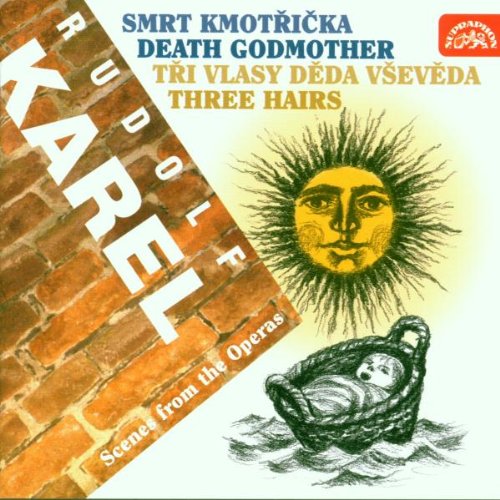
Rudolf Karel [1880-1945] He was a son of a railway employee. He studied law at Charles University and then composition from 1899 to 1904 with Antonín Dvořák and organ with Josef Klička. When WWI started he was visiting Russia. He was arrested, but managed to escape. He joined Czechoslovak Legions and served as a conductor of their orchestra. In 1923 he became a professor at Prague Conservatory. During WWII he took part in the resistance and in March 1943 was arrested. After being interned and tortured at Pankrác prison for two years [1943–1945] Karel was sent to Theresienstadt prison. The conditions in the prison were dire and he became ill with dysentery and pneumonia. SS-Oberscharführer Stefan Rojko sent all ill prisoners outside in freezing cold to disinfect the cell. As a result Karel and 8 other prisoners died on 6 March 1945. Ih Pankrác and Theresienstadt he continued working. He composed five-act fairy-tale opera Three Hairs of the Wise Old Man, writing on toilet paper using pencil or medicinal charcoal. The 240 sheets containing a detailed sketch of the opera was secretly passed to a friendly warden. The orchestrations were completed after his death and from his notes by his pupil Zbynek Vostřák.

Wikipedia

Smrt Kmotřička, Fairy-tale Comedy of Life and Death in Three Acts [1932]. Song of Father Fiddler and Death Godmother.

Tří vlasy děda Vševěda, Fairy-tale Opera in Five Acts [1944]. Duet of Princess And Drifter.

Imagen

_________________
Imagen


Arriba
 Perfil  
 
 Asunto: Re: La otra ópera
NotaPublicado: 21 Nov 2025 17:02 
Desconectado
Div@
Div@
Avatar de Usuario

Registrado: 05 Oct 2005 20:42
Mensajes: 3034
Imagen

Giuseppe Francesco Bianchi [1752-1810] Born at Cremona, Lombardy, he studied with Pasquale Cafaro and Niccolò Jommelli, and worked mainly in London, Paris and in all the major Italian operatic centres of Venice, Naples, Rome, Milan, Turin, Florence. He wrote at least 78 operas of all genres, mainly in the field of the Italian opera, but in the French opera too. These included the drammi per musica [opera seria] Castore e Polluce [Florence 1779], Arbace and Zemira [both Naples, 1781], Alonso e Cora [Venice, 1786], Calto and La morte di Cesare [both Venice, 1788], and Seleuco, re di Siria [Venice, 1791], and the opera giocosa La villanella rapita [Süttör, 1784]. Bianchi committed suicide in Hammersmith, London, in 1810, probably out of family troubles. He was buried alongside his daughter in the churchyard of the old Kensington Church, now St Mary Abbots, Kensington. His widow published parts of his "theoretical work" in the Quarterly Music Review for 1820/1821.

Wikipedia

Castore e Polluce, dramma per musica en cuatro actos [1779]. Aria: Sembianze amabili.

Imagen

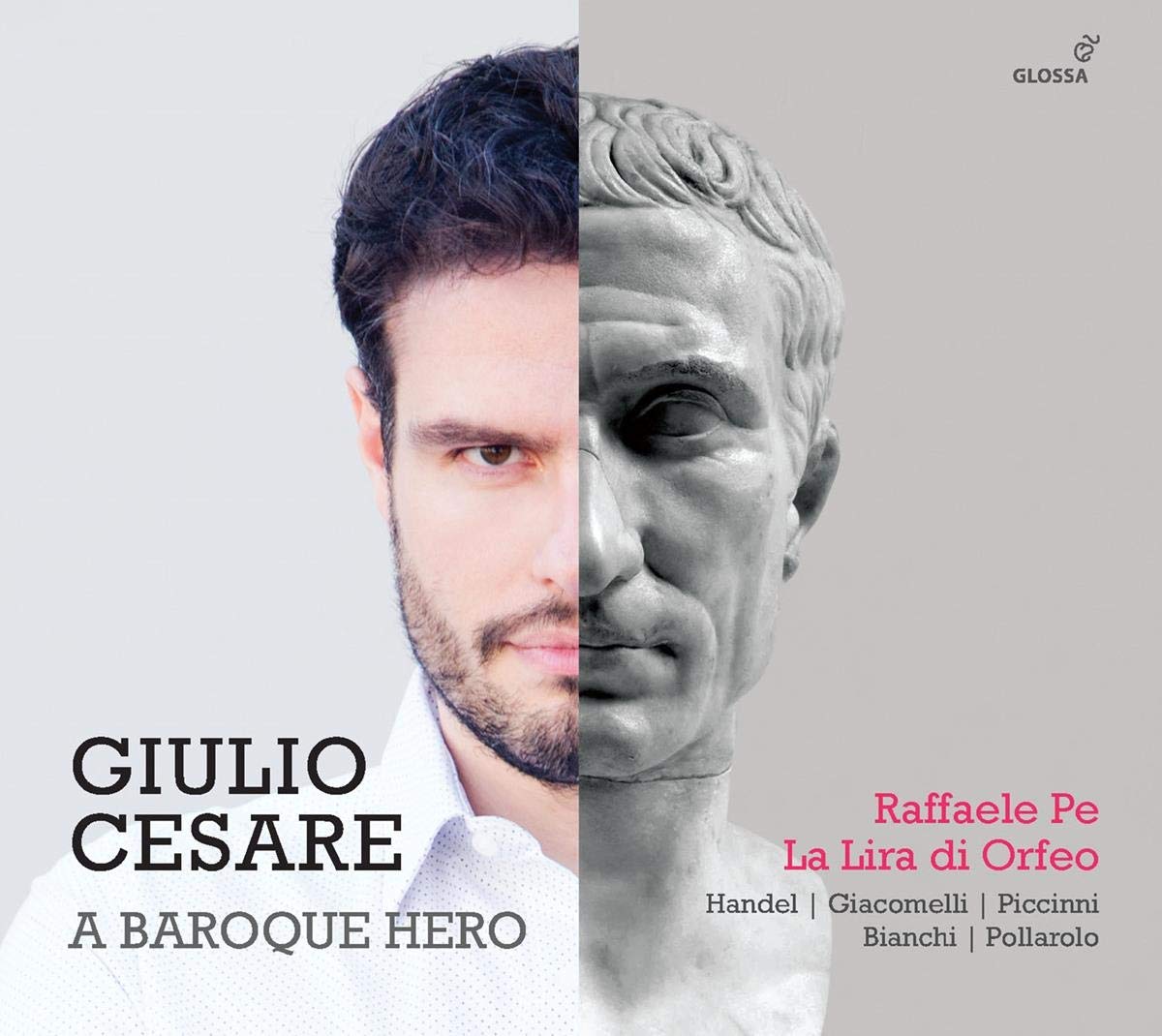
La morte di Cesare, dramma per musica en dos actos [1788]. Aria: Saprò d'ogn'alma audace.

Imagen

_________________
Imagen


Arriba
 Perfil  
 
 Asunto: Re: La otra ópera
NotaPublicado: 28 Nov 2025 19:27 
Desconectado
Div@
Div@
Avatar de Usuario

Registrado: 05 Oct 2005 20:42
Mensajes: 3034
Imagen

Sándor Balassa [1935-2021] He was born in Budapest. He showed an interest in the arts early in his childhood, which he spent mostly in the country, writing poems and stories, and illustrating them with drawings. A film of Verdi’s opera Il trovatore inspired him to become a composer. While training to become an engine fitter, Balassa studied music on his own, and consequently was accepted first to the Bartók Béla Secondary School of Music, and later to the Department of Composition at the Liszt Ferenc Academy of Music. After graduating from the Academy as a pupil of Endre Szervánszky he worked as a recording producer at Hungarian Radio for 16 years, in order to preserve his independence as a composer, he has stated. For 14 years from 1981, he taught instrumentation at the Liszt Ferenc Academy of Music, Budapest. The style of his music gradually changed during the second half of the 1970s. He left behind the sphere of atonality, discovering new tonalities and timbres. Instead of compositional ideologies, the beauty of music and of human expression came more into focus. He found that he could continue the European musical traditions this way, while giving special significance to preserving and renewing the Hungarian national musical culture.

Grand Piano

The Third Planet, ópera cantata [2006]. Eszközöd túl erős.

Imagen

_________________
Imagen


Arriba
 Perfil  
 
 Asunto: Re: La otra ópera
NotaPublicado: 05 Dic 2025 1:25 
Desconectado
Div@
Div@
Avatar de Usuario

Registrado: 05 Oct 2005 20:42
Mensajes: 3034
Imagen

John Christopher Smith [born Johann Christoph Schmidt; 1712-1795] He was born in Ansbach. Smith was the son of Johann Christoph Schmidt [John Christopher Smith Sr.] [died 1763], Handel's first copyist in London. His father, known to Handel from Halle, was summoned from Germany in 1716. He brought his family to London around 1720. John Christopher Smith Jr. had a few lessons from Handel and Johann Christoph Pepusch but studied mostly with Thomas Roseingrave. He later became Handel's secretary, musical assistant and amanuensis, when blindness prevented Handel from writing or conducting in his later years. The last year when Handel conducted performances of his oratorios was 1752. Handel fell out with Smith Sr. in the 1750s, but remained on good terms with the son. From 1753 to the composer's death in 1759, Smith conducted Handel's oratorios that were to be performed in those years. Handel bequeathed to Smith the keyboard instruments in his house at 25 Brook Street and his manuscripts. There was interest in reproducing Handel's music mechanically, using clocks for example. After Handel's death Smith was involved with John Langshaw in a project to transcribe pieces by the composer for barrel organ. In 1760, he married Martha Coxe, through whom he became step-father to William Coxe. After the success of his oratorio Paradise Lost in 1760, he became artistic director of the Covent Garden Royal Theatre, a position that he was forced to relinquish due to health reasons in 1772. When granted an annual pension by the King in 1774, Smith retired to Bath. When his wife died in 1785, he moved to Carlisle Street in London's Soho district, where he died in 1795. A blue plaque stands on the site in commemoration.

Wikipedia

The Fairies, ópera cómica en tres actos [1755]. Hark how the hounds and horn.

Imagen

_________________
Imagen


Arriba
 Perfil  
 
 Asunto: Re: La otra ópera
NotaPublicado: 19 Dic 2025 20:39 
Desconectado
Div@
Div@
Avatar de Usuario

Registrado: 05 Oct 2005 20:42
Mensajes: 3034
Imagen

Norman Dello Joio [1913-2008] He was born Nicodemo DeGioio in New York City to Italian immigrants. He began his musical career as organist and choir director at the Star of the Sea Church on City Island in New York at age 14. His father, Casimiro, was an organist, pianist, part-time composer, and vocal coach and coached many opera stars from the Metropolitan Opera. He taught Norman piano starting at the age of four. In his teens, Norman began studying organ with his godfather, Pietro Yon, who was the organist at Saint Patrick's Cathedral. In 1939, he received a scholarship to the Juilliard School, where he studied composition with Bernard Wagenaar. While he was a student, he worked as organist at St. Anne's Church, but he soon decided that he didn't want to make his living as an organist. In 1941, he began studying with Paul Hindemith, who encouraged him to follow his own lyrical bent, rather than sacrificing it to the atonal systems then popular. He received numerous awards and much recognition. He was a prolific composer in a variety of genres, but is perhaps best known for his choral music. Perhaps Dello Joio's most famous work in the wind ensemble medium is his Fantasies on a Theme by Haydn, which was composed for the Michigan State University Wind Ensemble and has since been performed thousands of times across the world. Dello Joio also wrote several pieces for high school and professional string orchestra, including the difficult piece Choreography: Three Dances for String Orchestra. In 1948 he became associated with the dancer Martha Graham, for whom he wrote several works, including Diversion of Angels and Seraphic Dialogue, a recomposition for chamber orchestra of his Symphony: The Triumph of Saint Joan.

He won the 1957 Pulitzer Prize for Music for his Meditations on Ecclesiastes; first performed at the Juilliard School on April 20, 1956. His Variations, Chaconne and Finale won the New York Critics Circle Award in 1948. It is a full-orchestra expansion of the theme and variations in the first movement of his Piano Sonata No. 3. In 1965, Dello Joio received the Emmy Award for the "most outstanding music written for television in the 1964–1965 Season" for his score to the 1964 NBC television special The Louvre. The composer created a five-movement suite for wind band entitled Scenes from The Louvre. The suite was commissioned by Baldwin-Wallace College for their symphonic band, and was premiered on March 13, 1966 with the composer conducting. He taught at Sarah Lawrence College from 1944 to 1950, and at the Mannes College of Music. He also served as professor and dean at Boston University's College of Fine Arts. In 1978, he retired and moved to Long Island. He donated his personal archive of manuscripts and papers to the Music Division of The New York Public Library for the Performing Arts. Despite infirmities, Dello Joio remained active as a composer until his final years, continuing to produce chamber, choral, and even orchestral music. He died in his sleep on July 24, 2008 at the age of 95 at his home in East Hampton, New York.

Wikipedia

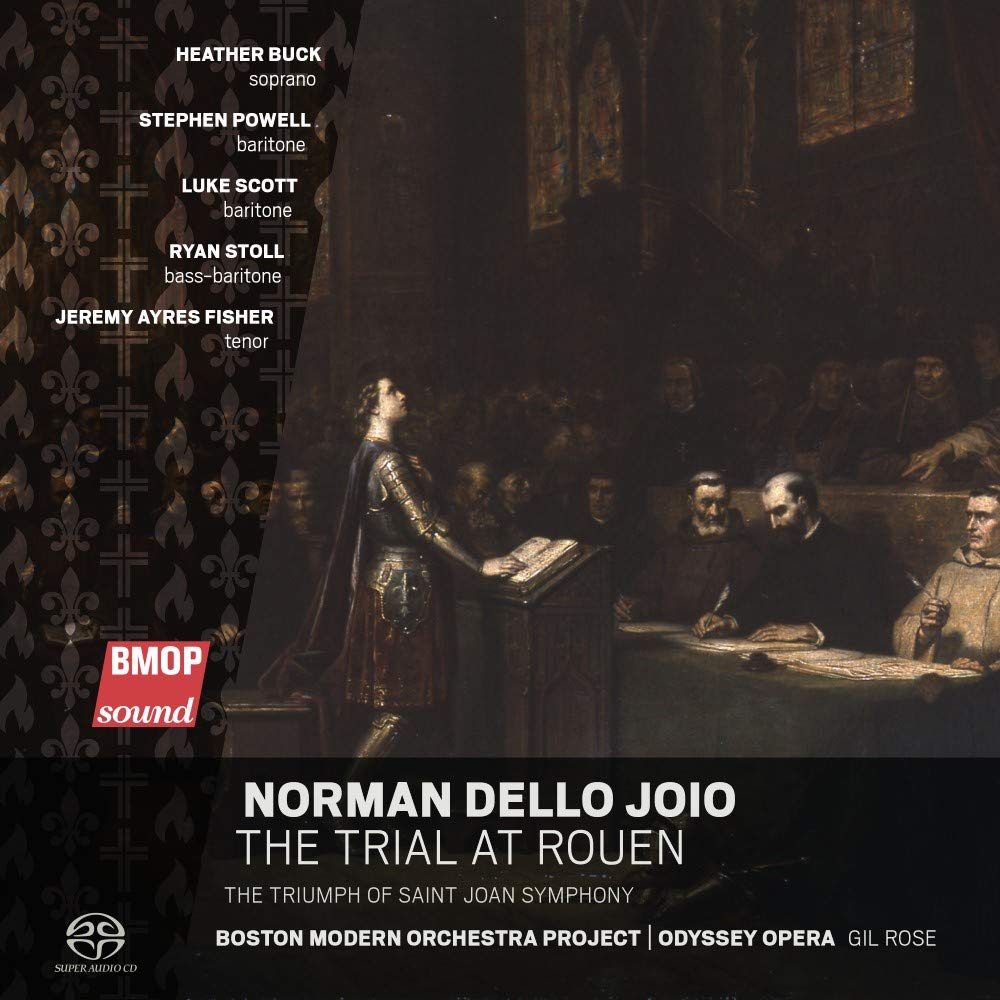
The Trial at Rouen, ópera en un acto [1956]. Mover of the Universe.

Imagen

_________________
Imagen


Arriba
 Perfil  
 
 Asunto: Re: La otra ópera
NotaPublicado: 26 Dic 2025 1:29 
Desconectado
Div@
Div@
Avatar de Usuario

Registrado: 05 Oct 2005 20:42
Mensajes: 3034
Imagen

Yevstigney Ipat'yevich Fomin [1761-1800] He was born in St. Petersburg into the family of a cannoneer, an artillery soldier of the Tobolsk infantry regiment. His father died when he was 6, and he passed into the care of his stepfather, I. Fedotov, a soldier. Fedotov took him to the Academy of Fine Arts in St. Petersburg on 21 April 1767, where Fomin studied architecture. As a full student there, he began learning the harpsichord in 1776 with Matteo Bumi. From 1777 he studied theory and composition with Hermann Raupach, and from 1779 with Blasius Sartori. In 1782 he went to Bologna to study with Padre Martini and Stanislao Mattei; three years later he was accepted into the Accademia filarmonica. Returning to St. Petersburg in 1785, he taught at the theatrical school and composed operas. From 1797 he was répétiteur for the imperial theater under Paul I. He composed about 30 operas including Yamshchiki na podstave [The Coachmen at the Relay Station] [1787]; Vecherinki [Soirées] [1788]; Orfey i Evridika [1792], Amerikantsy [The Americans] [a comic opera] [1800], and Zolotoye yabloko [The Golden Apple] [performed after the composers death in 1803]. The most successful for decades was his opera-melodrama Orfey i Evridika to a text by Yakov Knyazhnin. It was re-staged in Soviet times in 1947 in Moscow, and in 1953 and in 1961 in Leningrad. The famous one-act opera Anyuta to a text by Mikhail Popov has been occasionally attributed to Fomin [which is not a certainty]. In addition, Fomin has been credited with the music of another successful Russian opera Melnik – koldun, obmanshchik i svat [The miller who was a wizard, a cheat and a matchmaker, Moscow, 1779], on a subject resembling Rousseau’s Le devin du village: it is possible that this was his revision of the music compiled by a theatre violin player, Mikhail Sokolovsky.

Wikipedia

The Coachmen at the Horse Stage-Post, ópera cómica en un acto [1768]. Fragmento.

Imagen

_________________
Imagen


Arriba
 Perfil  
 
 Asunto: Re: La otra ópera
NotaPublicado: 02 Ene 2026 5:22 
Desconectado
Div@
Div@
Avatar de Usuario

Registrado: 05 Oct 2005 20:42
Mensajes: 3034
Imagen

Michael Tippett [1905-1998] He was born in London. He was brought up in Suffolk, his childhood largely overtaken by his mother’s fierce commitment to the women’s suffrage movement. It was an innate sense that he should respond creatively to global events, rather than any natural talent, that led to his studying at the Royal College of Music. His twenties and thirties were given over to compositions, now withdrawn, that he later decided were weakened by lack of originality and a devotion to left-wing politics. Aghast at the Great Depression and the threat of fascism, Tippett initially dedicated much of his time to political endeavours, not least major musical projects formed to boost the morale of unemployed miners in the north of England. He quickly rejected the Stalinist interpretation of Marxism, believing instead, with a temporarily violent fervour, in Leon Trotsky’s theory of permanent worldwide revolution.

A break-down of a major love affair and a subsequent period of Jungian therapy coincided with the outbreak of the Second World War, leading Tippett to reject violence of any persuasion – Trotskyian, Hitlerian, Churchillian – in favour of an ardent and absolute pacifism. He registered as a conscientious objector, and his refusal to comply with the terms of his exemption from military service led to his serving two months in HMP Wormwood Scrubs. By the end of the war he had produced a clutch of powerful works, characterized by imaginative counterpoint and an eclectic list of influences from Beethoven to blues: two string quartets, a symphony, the Concerto for Double String Orchestra, and A Child of Our Time, an oratorio woven around the events of Kristallnacht.

In 1951 Tippett resigned as Director of Music at Morley College, an adult education college in South London, where he had created a music department of historic significance, the choir and orchestra championing and even broadcasting then-neglected figures from the Renaissance and Baroque. The post-war years saw Tippett dedicated to the lushly-orchestrated lyricism of his first mature opera, The Midsummer Marriage, and its satellite works, chief among them his Piano Concerto, and the Fantasia Concertante on a Theme of Corelli. Critical reception was either politely perplexed or openly hostile, an attitude only exacerbated by the breakdown of his second symphony at its first performance, in 1958. Undeterred, Tippett reinvented himself musically with his second opera, King Priam [a re-telling of Homer’s Iliad], splintering the orchestra into a jagged mosaic of juxtaposed motifs, alternately harsh and lyrical. Praise of King Priam and the works it gave rise to – The Vision of Saint Augustine and a Concerto for Orchestra – coincided with a reappraisal of earlier pieces to cement Tippett’s reputation as one of the country’s leading composers. He was knighted in 1966.

Operas three and four – The Knot Garden and The Ice Break – were rapturously reviewed, younger audiences thrilling to the septuagenarian Tippett’s grappling with twentieth-century life in a soundworld that now fizzed with jazz and blues, the orchestra augmented with electric guitars and a drum kit. His commissions became international and lucrative; happy to appear on television chat shows wearing brilliant and eccentric outfits, he was something of a celebrity. In 1979 he was made a Companion of Honour, and four year later was appointed a Member of the Order of Merit. He enjoyed a mainly vigorous old age, reintroducing to his music a lyricism some thought had gone for good: the Triple Concerto; a large-scale setting of Yeats’s “Byzantium”; and a further two symphonies, one culminating with a set of blues songs in dialogue with Beethoven’s Ninth, the other incorporating the pre-recorded sound of human breath. For his ninetieth-birthday celebrations, working with an amanuensis as a result of macular degeneration, he produced a final blaze of instrumental colour in The Rose Lake, a ‘song without words for orchestra’.

The Michael Tippett Musical Foundation

The Midsummer Marriage, ópera en tres actos [1946–1952]. Fragmento.

Imagen

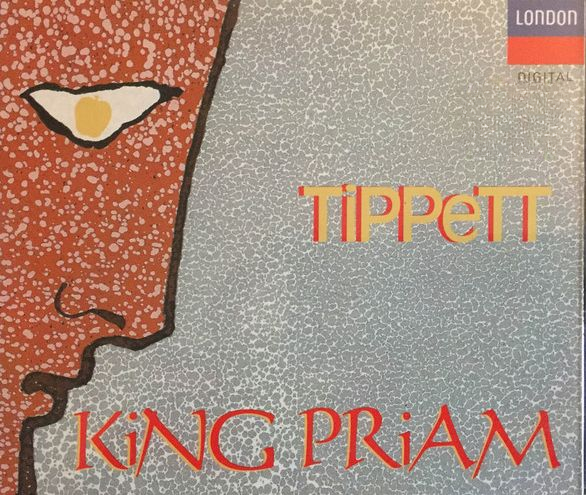
King Priam, ópera en tres actos [1958–1961]. Fragmento.

Imagen

The Knot Garden, ópera en tres actos [1966–1969]. Fragmento.

Imagen

The Ice Break, ópera en tres actos [1973–1976]. Fragmento.

Imagen

New Year ópera en tres actos [1985–1988]. Fragmento.

Imagen

_________________
Imagen


Arriba
 Perfil  
 
 Asunto: Re: La otra ópera
NotaPublicado: 10 Ene 2026 1:02 
Desconectado
Div@
Div@
Avatar de Usuario

Registrado: 05 Oct 2005 20:42
Mensajes: 3034
Imagen

Luigi [Lodovico] Caruso [Carusio] [1754-1823] He was born in Naples. He studied first with his father, Giuseppe, and then with Nicola Sala at the Conservatorio della Pietà dei Turchini, Naples. He began composing operas at an early age, achieving success both in Italy and abroad, where his works were performed almost every year. According to Gervasoni, his first opera was Il barone di Trocchia [Naples, Carnival 1773], but that is not certain because a work with that title by Giuseppe Gazzaniga was performed in the same year. His first opera for which there is documentary evidence was Artaserse [London, 1774]. From 15 March 1788 he was maestro di cappella of Perugia Cathedral [and for several years also of the S Filippo Neri oratory], a position he held until his death, except for a brief period of leave from 16 March 1801 to 31 July 1802. The suggestion that from 1808 to 1810 he was maestro di cappella at Urbino, after serving at Cingoli and Fabriano, arises from confusion with his brother Salvatore, who was dismissed after several disagreements with the chapter there. Caruso founded and directed a public music school in Perugia, where his pupils included Francesco Morlacchi. In this capacity he was responsible for preparing the soloists and chorus for a performance of Paisiello’s Passione in 1800. He had a profound knowledge of vocal technique and contributed, along with Guglielmi, Nicolini and Zingarelli, to Anna Maria Pellegrini Celoni’s Grammatica, o siano Regole di ben cantare [Rome, 1810, 2/1817]. He travelled in Italy and to Portugal, France and Germany to supervise productions of his operas, and six were performed in Perugia. Stricken with paralysis, he was partly disabled during the last years of his life.

Grove

Il fanatico per la musica, dramma giocoso [1781]. Aria: In mezzo a mille affanni.

Imagen

_________________
Imagen


Arriba
 Perfil  
 
 Asunto: Re: La otra ópera
NotaPublicado: 10 Ene 2026 12:19 
Desconectado
Div@
Div@

Registrado: 24 Mar 2004 11:24
Mensajes: 9854
Ubicación: Gasteiz
Ahondado en la ficha de Michael Tippett comentar que pude disfrutar en 2005 de una función de The Midsummer Marriage en el Covent Garden londinense y en aquella época en la que Oxford Street estaba repleta de tiendas de música -¡¡la de horas que metí en aquellas HMV!! adquirí esta grabación, baratísima, que escucho de vez en cuando y en a que una jovencísima Joan Sutherland realizaba un minúsculo papel, a pesar de la trampa de la carátula. La grabación recoge comentarios explicativos por encima de la música del presentador de la retransmisión radiofónica.

Imagen


Arriba
 Perfil  
 
 Asunto: Re: La otra ópera
NotaPublicado: 16 Ene 2026 12:09 
Desconectado
Div@
Div@
Avatar de Usuario

Registrado: 05 Oct 2005 20:42
Mensajes: 3034
Imagen

Juliette Nadia Boulanger [1887-1979] Nació en París. Estudió composición con Gabriel Fauré, amigo de la familia, y órgano con Chrale-Marie Widor. En 1918 dejó de componer tras la muerte de su hermana Lili, también compositora de talento. Su abuela fue Juliette Boulanger, una cantante. Su padre, Ernest Boulanger, fue profesor en el Conservatorio de París. En 1921 Nadia llega a ser profesora en el «American Conservatory of Music» en Fontainebleau. Desde 1950 fue la directora del mismo. Enseñó en la Juilliard School, en la Yehudi Menuhin School, en la Longy School, en el Royal College of Music, en la Royal Academy of Music y durante siete décadas en su apartamento, donde cada miércoles se reunían alumnos e intelectuales. Aplicando métodos y técnicas modernas, fue durante más de 70 años una de las profesoras de composición más influyentes del siglo XX, y cuenta, entre sus casi 1.200 alumnos, con varias generaciones de célebres compositores, entre los que se encuentran, Aaron Copland, George Gershwin, Leonard Bernstein, Michel Legrand, Quincy Jones o Philip Glass. Como directora de orquesta, hizo giras por Estados Unidos, Inglaterra y Europa. Fue una de las primeras en recuperar las obras de Monteverdi [en la década de 1930], y fue la primera mujer que dirigió un concierto para la Royal Philharmonic Society de Londres [1937], la Orquesta Sinfónica de Boston (1938) y la Orquesta Filarmónica de Nueva York [1939].

Last FM


Imagen

Stéphane Raoul Pugno [1852-1913] He was born in Paris. He made his début as a pianist in 1858, and with financial help from Prince Poniatowski he then studied at the Ecole Niedermeyer. From 1866 to 1869 he was a student at the Conservatoire, where he won a premier prix for the piano (1866), harmony (1867) and the organ (1869) and a première médaille for solfège (1867). However, as an Italian citizen, he could not compete for the Prix de Rome. He took an active part in the Commune of 1871 and in May was made music director of the Opéra. On the fall of the Commune he escaped any retribution and in 1872 became organist and in 1878 choirmaster at the church of St Eugène-Ste Cécile, a post he held until 1892. In 1874 he also became choirmaster at the Salle Ventadour. From 1892 to 1896 he was professor of harmony at the Conservatoire and from 1896 to 1901 professor of the piano there. In 1893 he resumed his concert career and was soon recognized as perhaps the leading French pianist of the time. Excelling in the music of Mozart, Chopin and Franck, which he did much to popularize, he was noted for his lightness of touch and for his extremely flexible and polished technique, demonstrated in the recordings made in 1903 for the Gramophone and Typewriter Co. in Paris. He was also an excellent chamber music player, and his recitals with Ysaÿe, which began in 1896, were celebrated. An early exponent of Wagner in France, he and Debussy provided the two-piano accompaniment for a famous concert performance of parts of Das Rheingold on 6 May 1893. He composed, mostly before resuming his concert career, a considerable number of stage works in the lighter genres and salon music, now forgotten, but created a more lasting influence through his many piano pupils.

Grove

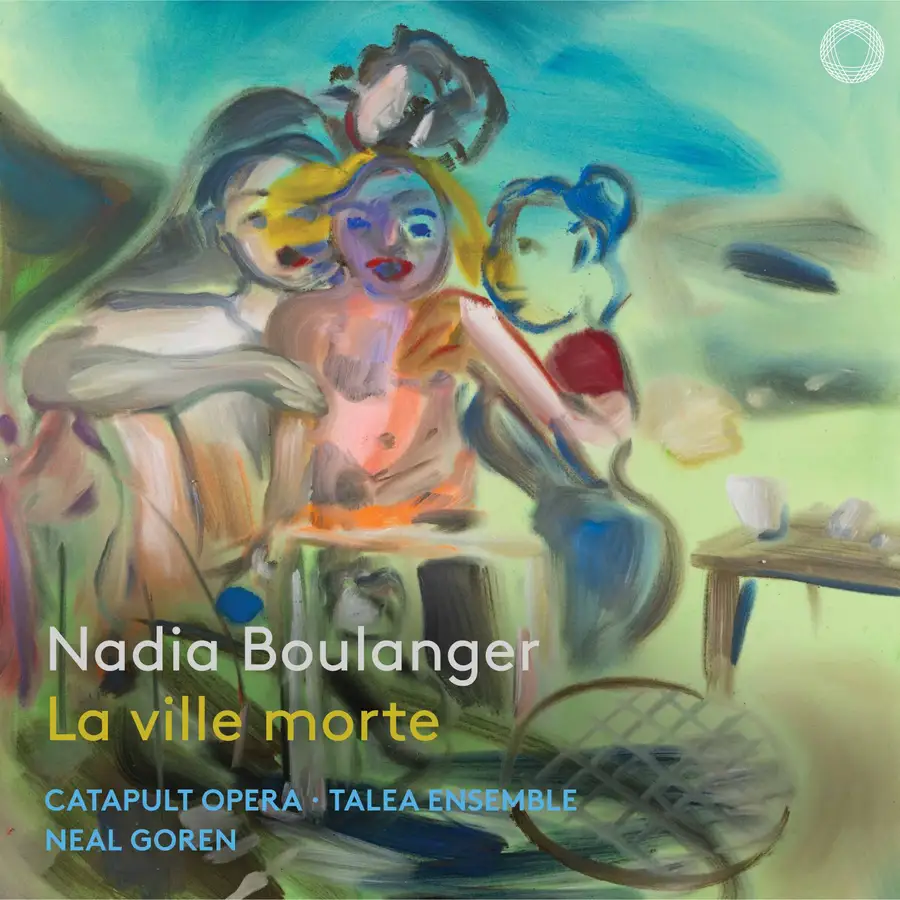
La Ville morte, ópera en cuatro actos [1909-1912, reconstruida 2005]. Non, non, Leonard! Je t'en prie!
Imagen

_________________
Imagen


Arriba
 Perfil  
 
 Asunto: Re: La otra ópera
NotaPublicado: 23 Ene 2026 11:52 
Desconectado
Div@
Div@
Avatar de Usuario

Registrado: 05 Oct 2005 20:42
Mensajes: 3034
Imagen

Angelo Tarchi [c. 1760-1814] He was born in Naples. Tarchi is said to have entered the Pietà dei Turchini conservatory, Naples, in 1771, studying with Lorenzo Fago and Sala. In 1778 his first opera, a Neapolitan dialect comedy, was performed so successfully at the conservatory that the king commanded a performance at the palace in Caserta. This was followed by three more comic operas for Neapolitan theatres in 1778–1780, his last for that city except for one in 1790. From 1781 to Carnival 1785 he worked mostly in Rome and then farther north, centring his activities on Florence in 1785 and Milan in 1787–1788. He produced his first serious opera Ademira at Milan in 1783, and from Carnival 1785 most of his work was in that genre. A remarkably fertile composer, even for the time, he usually produced from four to six operas each year; perhaps his most successful work of this period was Ariarate [1786, Milan], also performed at Naples and elsewhere.

The quick growth of his reputation resulted in his appointment as music director and composer at the King’s Theatre in the Haymarket, London, for the seasons December 1787 to June 1788 and January to June 1789 [he had earlier composed the music for the castrato Rubinelli’s part in a pasticcio, Virginia, performed at the King’s Theatre for Rubinelli’s début there on 4 May 1786, but it is not clear whether he went to London then]. In 1790 his earlier opera Il conte de Saldagna [1787] was performed in Paris, and two new comic works were given there in 1790–1791. Continuing his career in Italy, he is said by Fétis to have fallen ill on a visit to Naples in 1793, making a slow recovery and not producing a new opera until Carnival 1794–1795. His output of operas had slowed somewhat in the early 1790s and now it did so still more. His last Italian works were performed early in 1797. He then went to Paris and attempted to establish himself as an opéra comique composer, having seven works performed between late 1798 and early 1802. But he never found the formula for success in that genre. Although some Italian influence was not distasteful to opéra comique audiences at this time, Tarchi’s music seems to have remained too italianate to please completely. Several of his attempts were failures [Fétis called D’auberge en auberge, 1800, his best], and he finally abandoned the stage, remaining in Paris as a fashionable singing teacher.

Grove

Il conte de Saldagna, tragedia per musica en tres actos [1787]. Ah! Sol bramo, o mia Speranza.

Imagen

_________________
Imagen


Arriba
 Perfil  
 
Mostrar mensajes previos:  Ordenar por  
Nuevo tema Responder al tema  [ 1636 mensajes ]  Ir a página Anterior  1 ... 103, 104, 105, 106, 107, 108, 109, 110  Siguiente

Todos los horarios son UTC + 1 hora [ DST ]


¿Quién está conectado?

Usuarios navegando por este Foro: No hay usuarios registrados visitando el Foro y 44 invitados


No puede abrir nuevos temas en este Foro
No puede responder a temas en este Foro
No puede editar sus mensajes en este Foro
No puede borrar sus mensajes en este Foro


Powered by phpBB © 2000, 2002, 2005, 2007 phpBB Group
Traducción al español por Huan Manwë para phpbb-es.com